
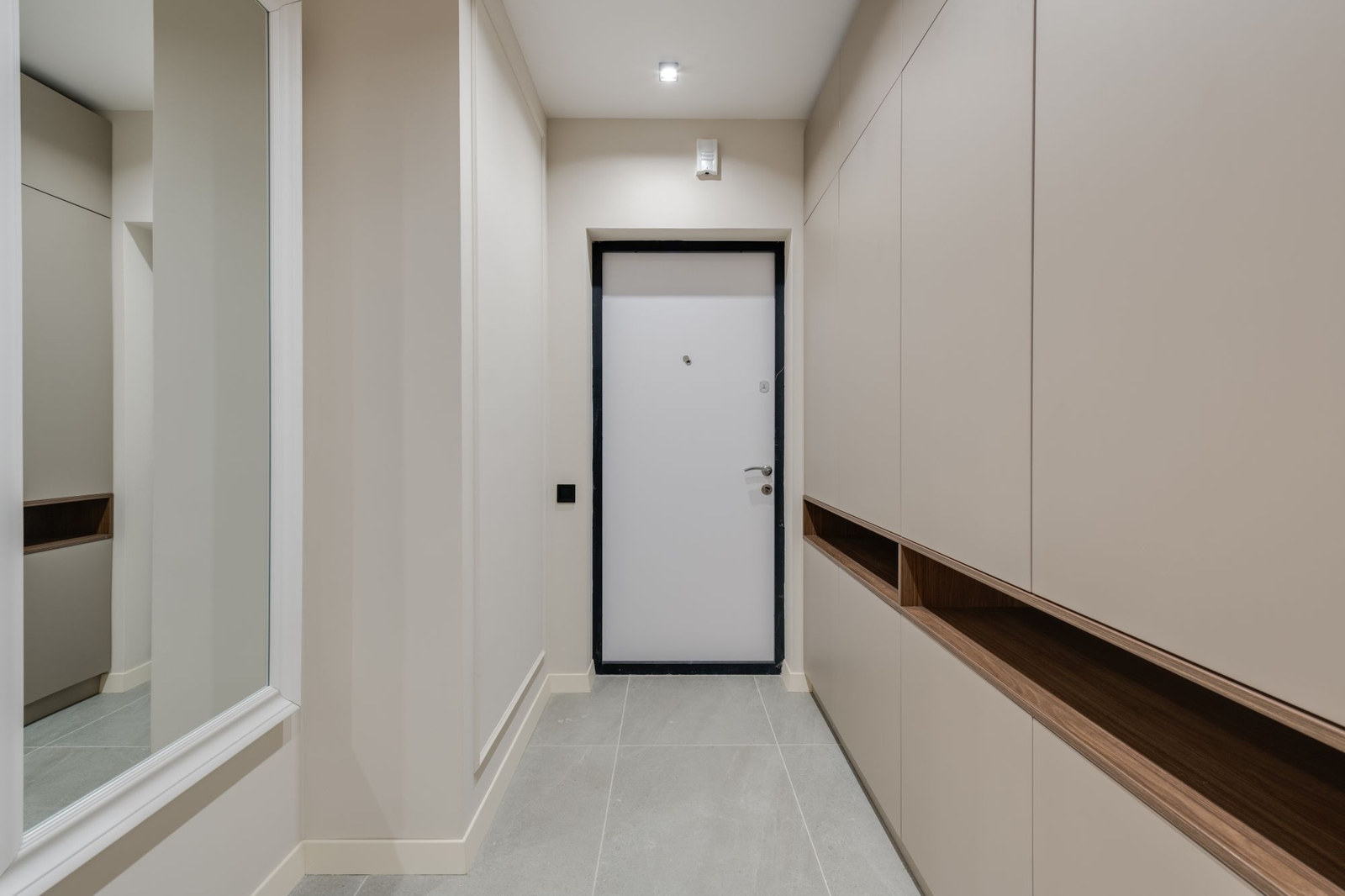
Frameless doors, also called concealed doors, hidden doors or invisible doors, are a growing request in Canadian interiors. The frame and hinges sit inside the wall, so a flush slab can close in plane with the drywall. Painted to match, the door reads as part of the wall rather than as a traditional cased opening. That look suits compact condominiums, renovated townhouses and contemporary custom homes, where designers want a calm wall plane and a way to tuck away laundry, storage or mechanical rooms. Flush Wall Doors, based in Creston, British Columbia, supplies complete frameless door sets and Frame & Hinge Sets to projects across Canada and the United States.
What is driving demand
Canada’s largest cities have added a substantial stock of condominiums over the past two decades, especially in Metro Vancouver and the Greater Toronto Area. In a smaller suite, bulky casing competes for visual space. Flush and fine-line contemporary doors are now a common choice in urban multifamily interiors, and concealed doors are often used in Toronto and other centres to hide service rooms so the living area stays uncluttered. Renovation is the other main driver: buyers in older neighbourhoods of Montreal, Toronto, Vancouver and Ottawa are opening up plans and replacing dated interior doors as part of a wider finish upgrade. A purely all-white palette is no longer the only brief. Warmer woods, mixed materials and richer neutrals now sit alongside painted flush slabs, and maple, walnut, oak or fir veneer answers the interest in natural texture.
Sizes, finishes and price
Most Canadian interior doors are still ordered at 80 inches (about 2,032 mm) high, which is taller than the 1,980 mm minimum height in Table 9.5.5.1 of the National Building Code of Canada and the provincial codes based on it. Newer and higher-ceiling homes often move to 84 or 96 inches. Flush Wall Doors offers complete sets — a primed concealed frame plus a primed flush slab — at those three heights, with widths from 18 to 36 inches. Complete sets start at $995 USD for an 80-inch door, $1,045 at 84 inches and $1,095 at 96 inches. Custom heights up to 96 inches and custom widths up to 40 inches are available. Prices are published in U.S. dollars, so Canadian projects should allow for currency conversion and for shipping, which is quoted separately. Handles, locks and installation are not included. Use the frameless door calculator to price a configuration, then contact the shop for a formal quote.
Codes and installation
The National Building Code, and the provincial codes that adopt it, set minimum door sizes inside dwelling units. Required entrances and certain utility or stair doors are generally at least 810 mm wide; typical rooms are 760 mm; walk-in closets and many bathrooms may be 610 mm, though at least one bathroom doorway on a standard hallway is often required to accept a 760 mm door. Confirm the local edition, such as the British Columbia, Ontario or Quebec construction codes. Fire separations are a separate issue: suites are commonly separated from adjacent suites by a rated assembly, often 45 minutes in Part 9 buildings. A concealed interior door inside a suite is not the same product as a rated suite-entry or exit door, so confirm listings if a rating is required. Installation is more exacting than a standard casing job. The rough opening, drywall and paint have to be coordinated so the slab sits flush, and in strata buildings, especially in Vancouver and Toronto, elevator bookings and building rules may affect delivery.
This page is a market overview, not a substitute for a local code review. Always confirm the edition in force and any municipal or accessibility amendments for the project.

Urban centres
Vancouver
West Coast condominiums and laneway or townhouse projects put a premium on a clean, light interior. Concealed doors help compact suites feel larger and keep laundry or storage out of sight. Flush Wall Doors is based in Creston, in the Kootenays, and ships frameless door sets across British Columbia.
Toronto
High-rise condos, mid-rise buildings and renovated houses in the Greater Toronto Area are a natural market for flush and hidden doors. Designers often use concealed doors in Toronto corridors and bedrooms, and to hide utilitarian rooms so a small plan still feels orderly.
Calgary
New suburban houses, inner-city infill and downtown living support both standard 80-inch doors and taller openings in contemporary homes, with a finished look that still meets practical room widths.
Montreal
The city has a long tradition of renovating older walk-ups, plexes and lofts, and renovation is a large part of residential construction activity in the region. Concealed and flush doors suit the architectural interiors many Island and South Shore projects now aim for.
Ottawa
Downtown condos, older Centretown and Glebe houses, and newer suburban homes all generate door upgrades, often a quiet flush door that can be painted into the wall colour.
Edmonton
New construction and secondary suites are a steady source of work. A frameless set can give a home a more custom appearance without a fully bespoke millwork package.
Frameless and concealed doors are also specified across the United States; see our companion guide to the U.S. market. For a project in any of these Canadian cities, start with the price calculator or contact Flush Wall Doors to discuss sizes, veneers and lead times.